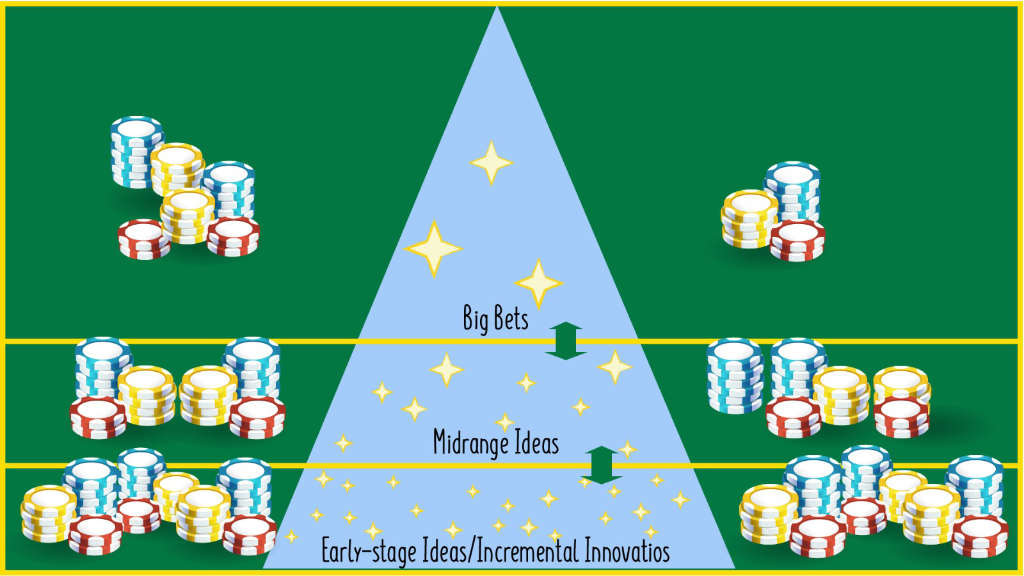
Iterative and Incremental Development in the Enterprise. When you get into complexity, predictive planning is ineffective because you are under conditions of unpredictability. Updating the work plan is very costly.
The planning mode that is valid in this context is the adaptive mode that proceeds in small steps (iterations) followed by a review of what has been accomplished after each step taken.
Iterative Process
The next step may include modifications of what has been done (an iterative process that literally leads to renewing what has just been developed).
Incremental Process
Otherwise it may include the development of new elements that build on previous ones (incremental process).
Integration of the two approaches
I have always found it difficult to explain to people, how the integration of these two approaches can happen in practice.
This is especially important with physical products and complex projects in general.
Then with Piergiorgio Lovato, we designed an experiential course on adaptive planning, with a formative game consisting of building a small house with Legos.
This house has only, 2 windows and 1 door.
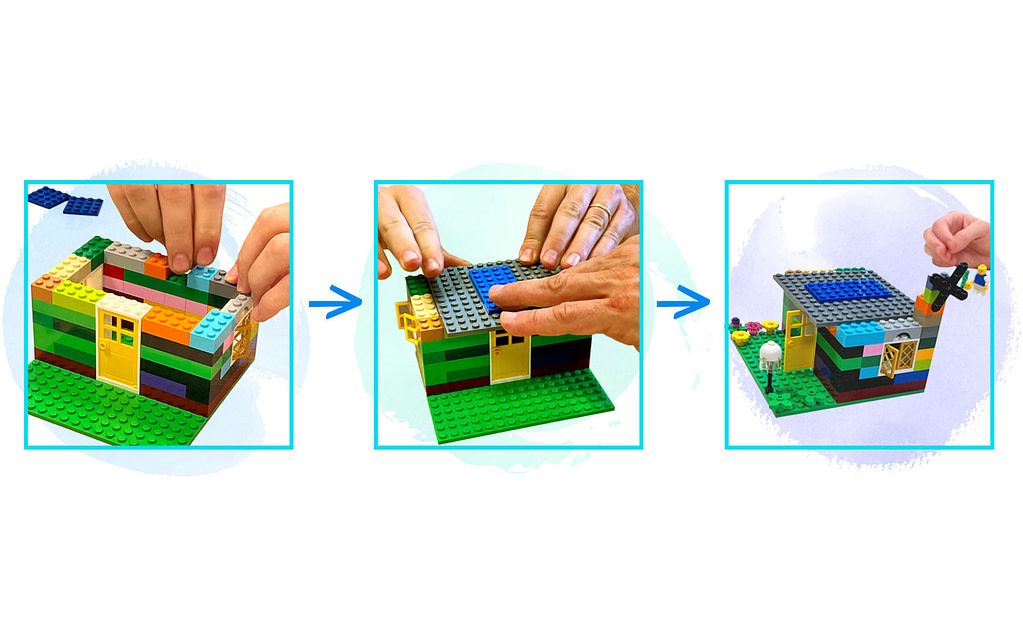
People involved in the training are divided into two teams:
-
- A group of people act as observers in the context
-
- A group physically builds the house
Piergiorgio plays the role of the client and I play the role of the project leader
Adaptive versus classical predictive approach
We build the house a first time in this mode:
-
- The driving style of the project is command and control.
-
- Development is in predictive mode
-
- Only when the work is finished do we ask for feedback from the client.
-
- Small changes requested by the client turn out to have a great impact.
We build the house a second time in these other ways:
-
- The driving style of the project is participative
-
- Development is iterative and incremental
-
- We interact with the customer at every iteration
-
- Small changes requested by the client turn out to have a small impact.
At the end of this experiential journey, the observer team tells what they observed of the two ways of working.
The team of developers tells how they experienced the two modes of work.
The goals that are achieved are:
-
- Experience the difference between a predictive and an adaptive approach.
-
- Understand the effect that leadership style, command and control, has versus a participative style.
-
- Understand what the iterative process (modification of what has been built) means in physical reality and how cumbersome it can sometimes be.
-
- Understand the undisputed advantages of an incremental approach when it is applicable.
-
- Understand why it is necessary to proceed in small steps (iterations) to reduce non-value work for the customer.
In all the cases in which we had this experiential game played, all the people involved were able to experience the validity of the adaptive approach over the classical predictive approach.
All found the latter mode of construction far preferable to the former.